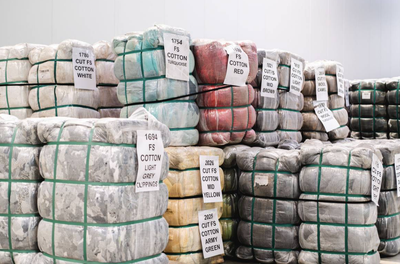

For decades, the cost of fashion waste has largely fallen on municipalities, charities, waste-management systems and, ultimately, taxpayers. That is set to change in the European Union as new Extended Producer Responsibility (EPR) rules begin to reshape how clothing waste is paid for.
Under the EU’s revised Waste Framework Directive, Member States must establish Extended Producer Responsibility schemes for textiles. The principle is straightforward: companies placing textile products on the market will become financially responsible for managing those products once they reach the end of their useful life. The rules are designed to make producers contribute towards collection, sorting, reuse, preparation for reuse and recycling.
The legislation entered into force in October 2025, but the practical changes are still being rolled out. EU countries have until June 2027 to transpose the new textile EPR requirements into national law, with schemes expected to become operational by April 2028.
For fashion brands, the significance goes beyond another compliance cost. One of the central ideas behind EPR is that producers should have an incentive to consider what happens to a product before it is even made. Under the EU framework, producer fees are intended to take environmental considerations into account, meaning products that are more difficult to manage at the end of their lives can face different financial treatment from products designed with circularity in mind.
That could begin to change decisions made much earlier in the supply chain. A cheaply produced garment that is difficult to repair, made from multiple fibres and almost impossible to recycle could become more expensive for its producer to put on the European market. A more durable garment designed to be repaired or recycled could, in theory, face lower costs.
The objective is to move fashion away from a linear model — take resources, make clothes, sell them and dispose of them — towards one in which the end of a garment’s life is considered from the beginning.
The scale of the problem helps explain why the EU is intervening. The European Commission estimates that around 5.2 million tonnes of textile waste are generated in the EU each year. Its textiles strategy has also identified significant potential to increase reuse and recycling, while noting that a large proportion of textiles placed on the European market is ultimately discarded rather than separately collected.
EPR is therefore intended to create an economic incentive for fashion companies to produce less waste in the first place. But there is a question hanging over the system: will making brands pay for textile waste actually make them produce better clothes?
The answer will depend heavily on how national schemes are implemented and how significant the financial differences between products become. If EPR fees are too small to influence design and production decisions, the system could simply become another cost of doing business. Brands could absorb the fees or pass them on to consumers without fundamentally changing how they make clothes.
If the financial incentives are strong enough, however, the effect could be much broader. Brands could have greater reason to design garments for longevity, reduce unnecessary material combinations, improve recyclability and invest in repair and take-back systems. The European Commission has explicitly linked EPR with encouraging producers to consider circularity throughout a product’s lifecycle.
The new rules are arriving alongside a wider wave of European fashion regulation. The EU’s Ecodesign for Sustainable Products Regulation is introducing requirements intended to improve product durability, repairability and recyclability, while Digital Product Passports are expected to provide more information about products and their materials.
And this summer, another major change arrived: from 19 July 2026, large companies in the EU are prohibited from destroying unsold apparel, clothing accessories and footwear, subject to specific exemptions. The measure directly targets one of fashion’s most controversial waste practices — destroying products that have never even been worn.
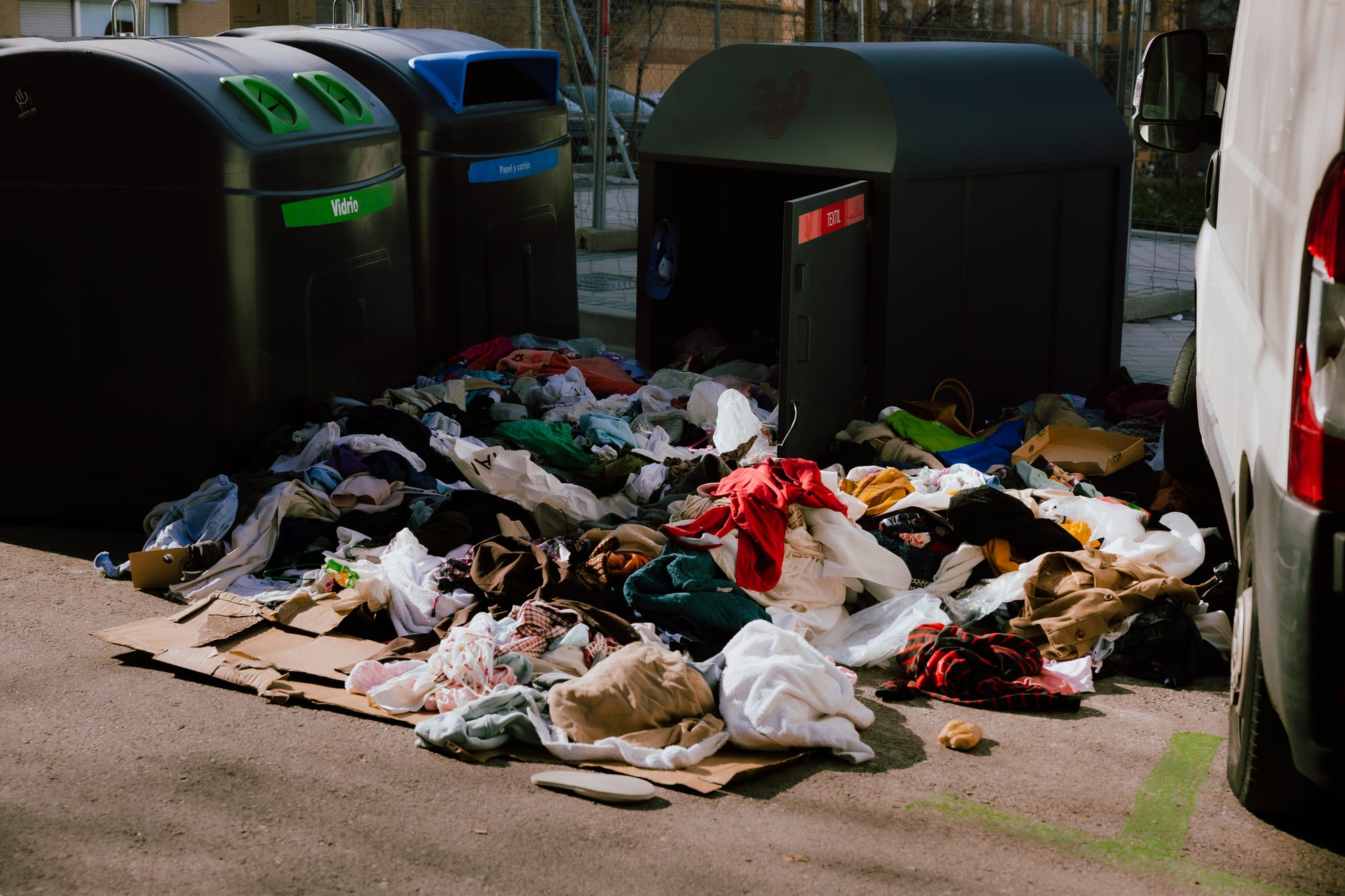
Together, these policies represent a significant change in the relationship between fashion and waste. For years, circularity was largely framed as an opportunity: resale platforms, recycled fibres, repair services and take-back schemes were promoted as ways for brands to demonstrate environmental responsibility. Increasingly, European regulation is turning some of those principles into obligations.
That could make EPR one of the most consequential developments for European fashion over the next few years — not because paying for waste will automatically make the industry circular, but because it could finally make the cost of waste visible to the companies creating it.
The real test will come when the first full schemes begin operating. If brands respond by designing clothes that last longer and are easier to reuse and recycle, EPR could help shift fashion towards a genuinely circular model. If they simply treat waste fees as another business expense, the industry may continue producing enormous quantities of disposable clothing — only now with a bill attached.
For a system designed to make producers responsible for what happens after the sale, that distinction could make all the difference.