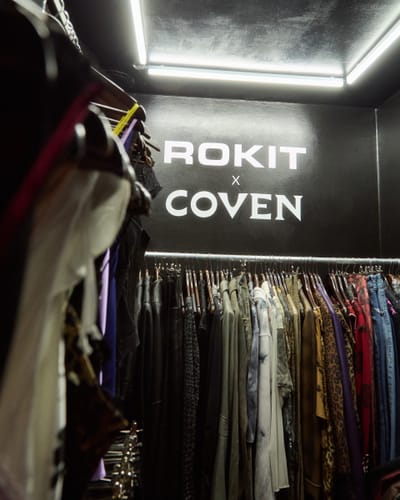
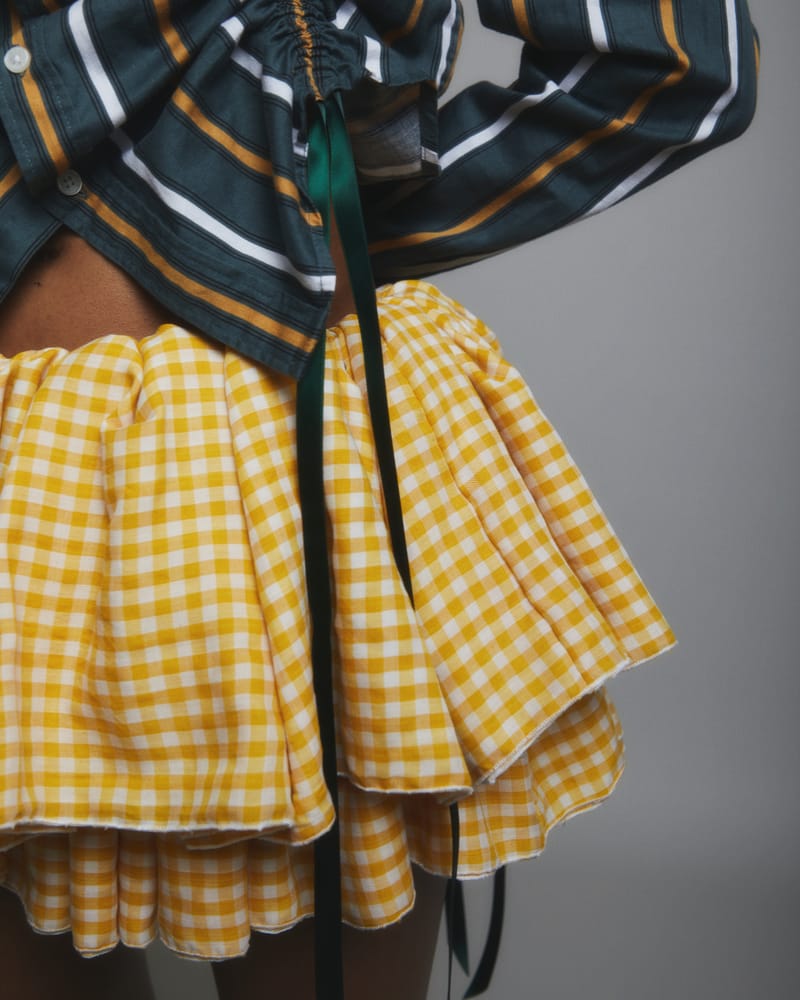
Rokit Originals has unveiled a new REWORKED collection that signals a clear evolution in its design language, as the London-based label continues to expand its approach to contemporary reworked fashion under the creative direction of Brier Holloway.
Built entirely from 100% preloved materials, including reclaimed denim, leather and suede sourced through Rokit Vintage’s wider circular fashion ecosystem, the collection reflects a shift towards oversized silhouettes, cleaner construction and a more graphics-led aesthetic. The direction marks a deliberate move away from earlier womenswear-led approaches in favour of a more unisex, street-informed identity.
Holloway describes the intention behind the change as a response to both material and cultural influences within reworked fashion. “The new REWORKED collection embodies this vision through larger silhouettes, cleaner shapes and a more contemporary colour palette, while still celebrating the unique prints and textures of vintage textiles,” she says.
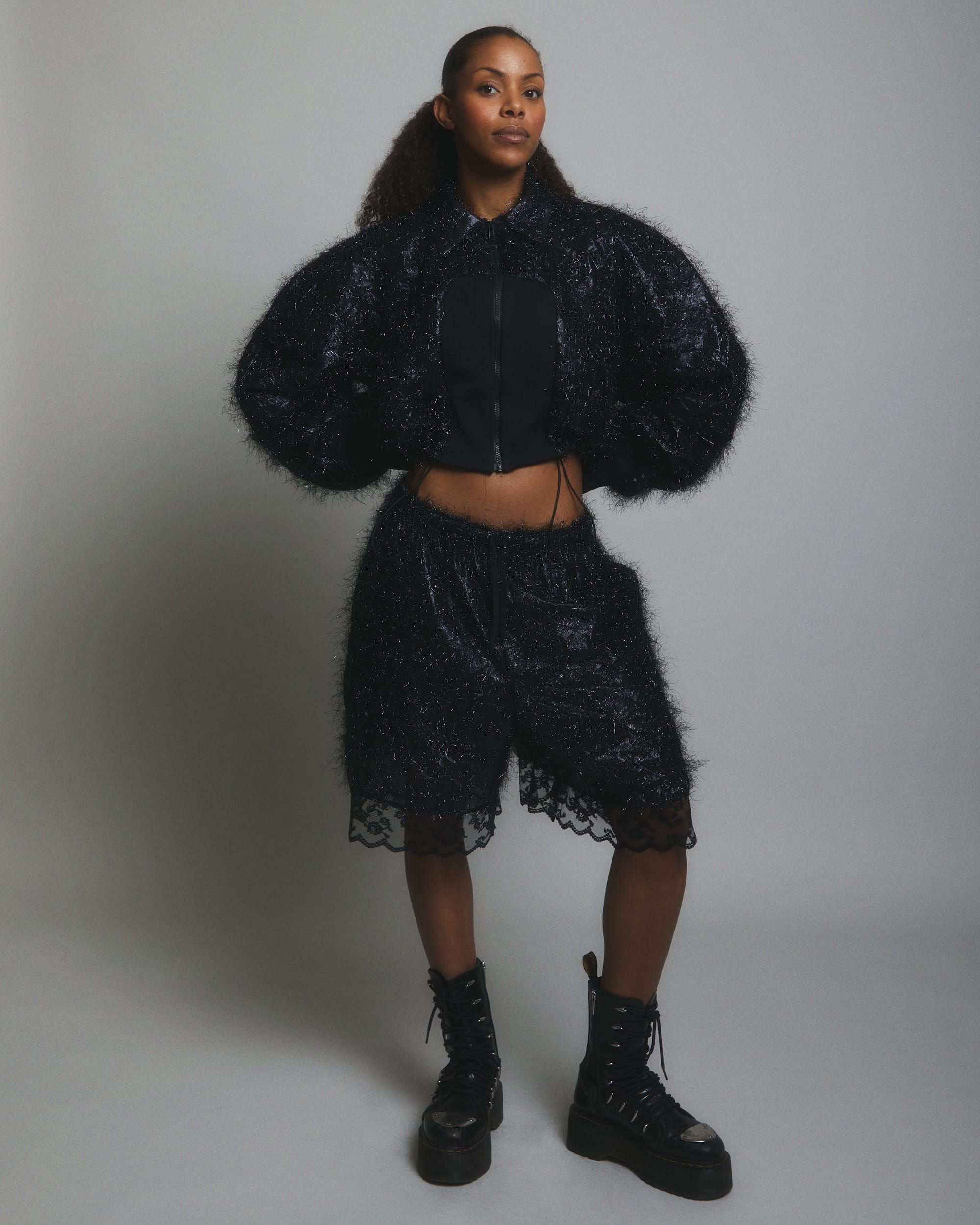
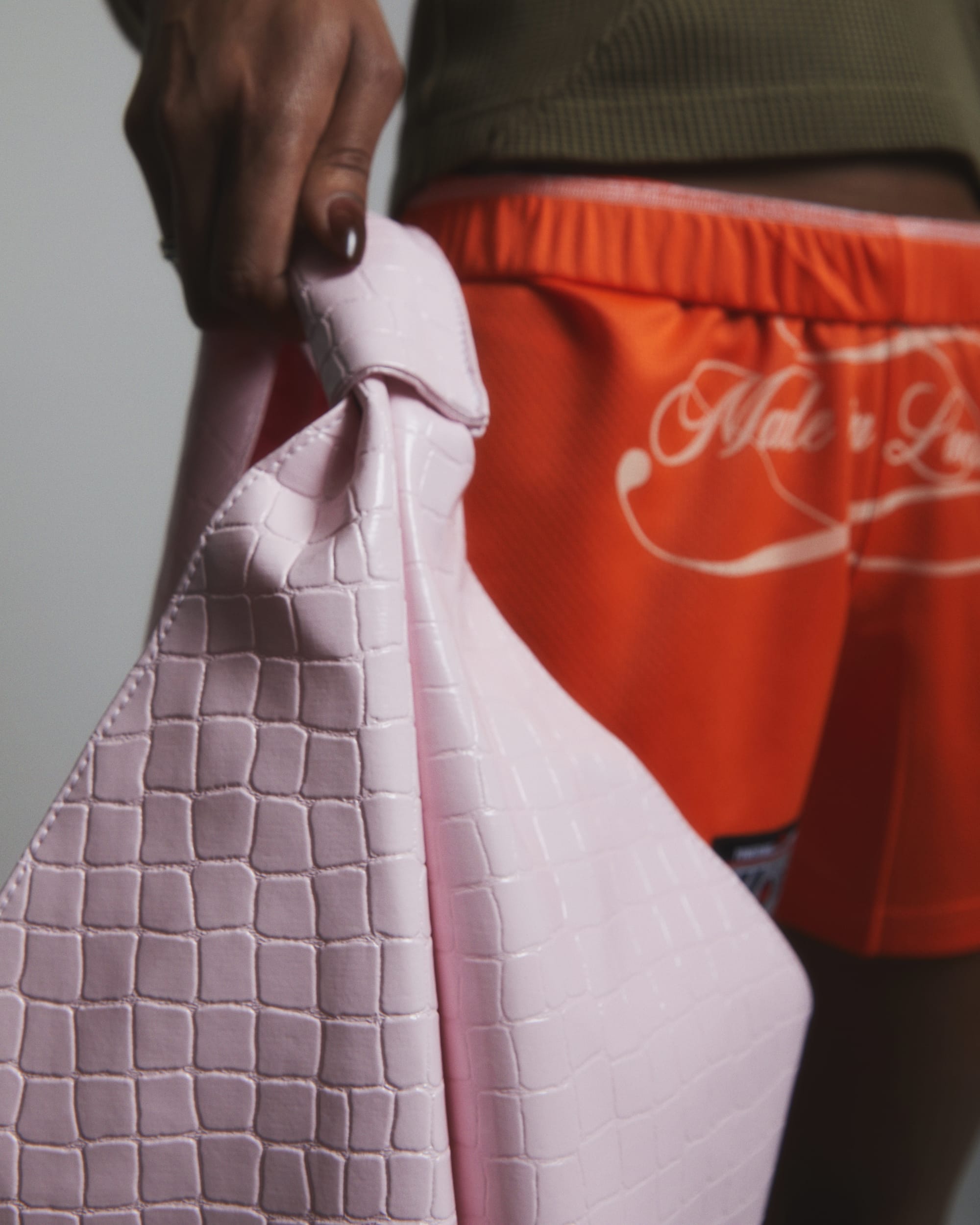
The updated design approach also repositions Rokit Originals’ relationship with reconstructed garments, moving towards what Holloway calls a more contemporary, oversized language that challenges expectations of what reworked fashion looks like in practice. “Compared to previous Rokit Originals releases, the collection moves away from a womenswear driven design approach towards a more oversized, graphics driven direction,” she explains, adding that it results in “a cleaner, less traditional reconstructed aesthetic.”
At the core of the collection remains a fabric-led design process shaped by the unpredictability of working with existing garments rather than new textiles. Each week, the studio receives varied vintage pieces, which become the starting point for experimentation and reconstruction rather than the endpoint of a fixed design concept.
“Every week we receive garments made from a wide range of textiles, creating endless opportunities for experimentation,” Holloway says. The process, she adds, relies heavily on adaptability: “Working with existing materials over existing fabrics pushes the team’s and my creative spontaneity, as we are constantly problem solving and responding to what arrives at the studio.”
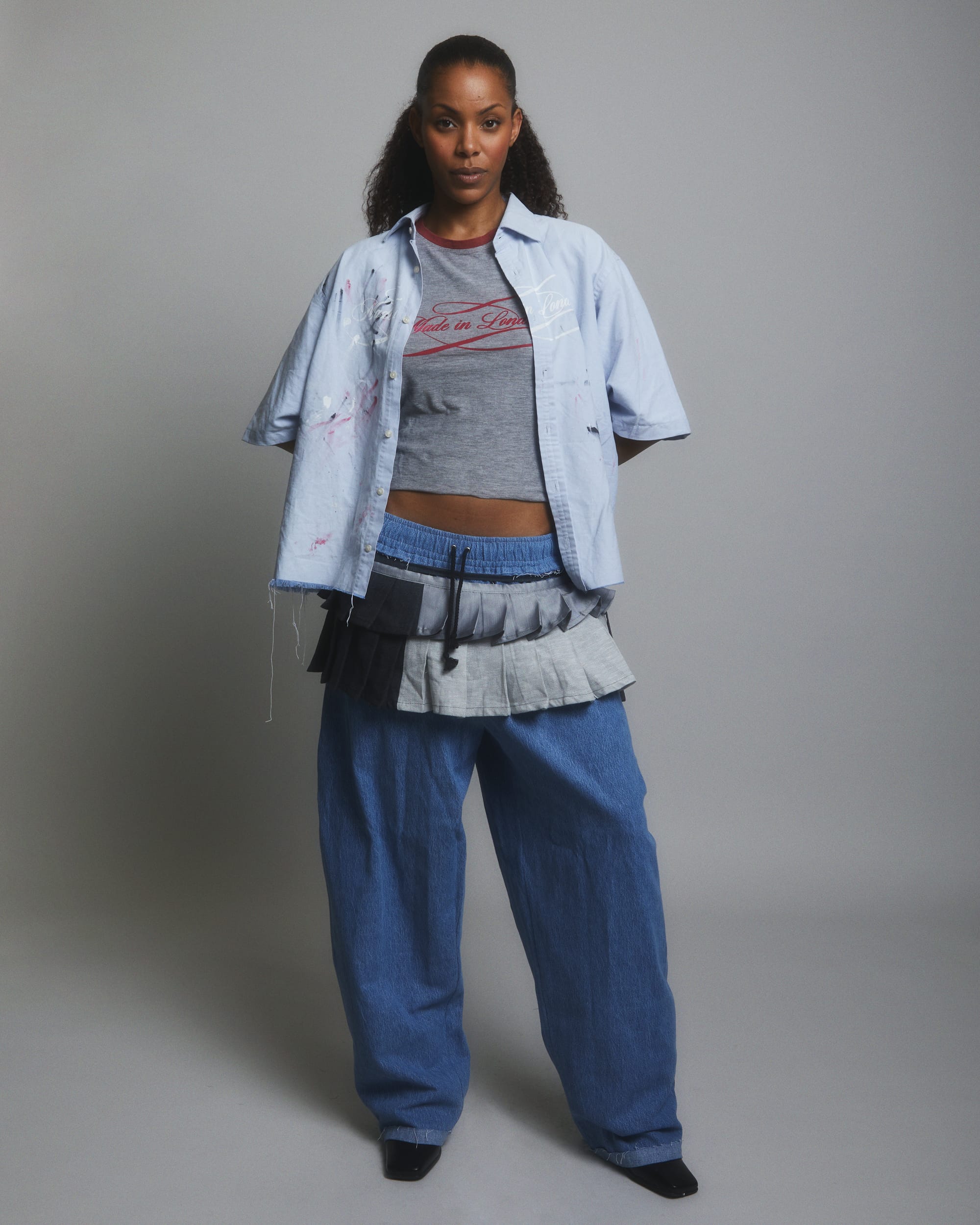
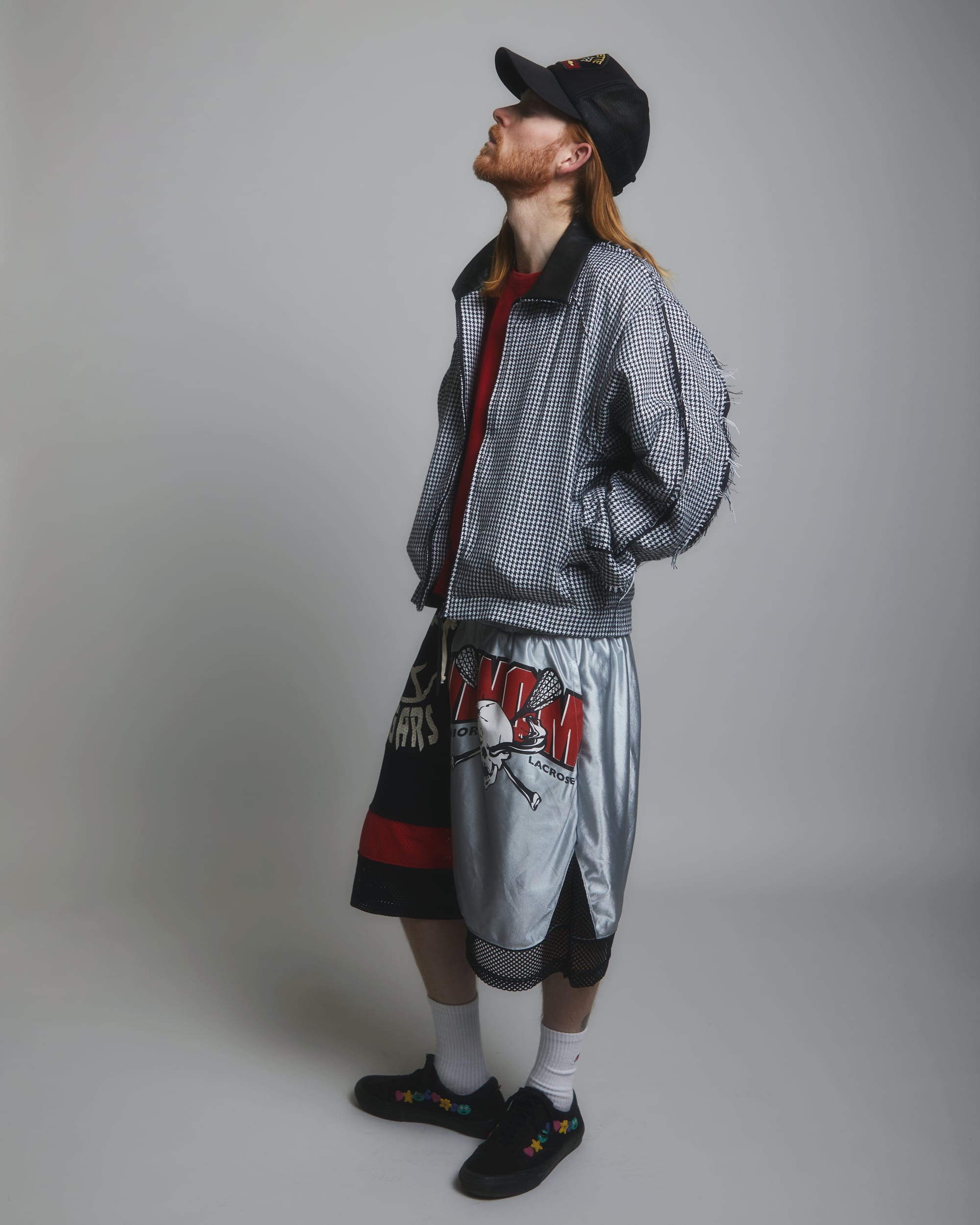
Rather than imposing a fixed design outcome, the studio operates through a “fabric first and design second” methodology, where imperfections, wear and structural inconsistencies are incorporated into the final garment. “Sometimes working with worn areas enhances the design itself,” Holloway notes, highlighting how damage and age can become part of the creative output rather than something to be corrected.
This approach also defines the broader challenge of consistency when working with vintage stock, particularly in achieving reliable fit across varied source garments. The unpredictability of materials is treated as both constraint and opportunity, shaping how each piece evolves through reconstruction.
The collection also draws on influences from streetwear, skate culture and relaxed tailoring, filtered through a contemporary lens that prioritises versatility. Holloway’s focus is on designing garments that move across different contexts, from everyday wear to more elevated styling.
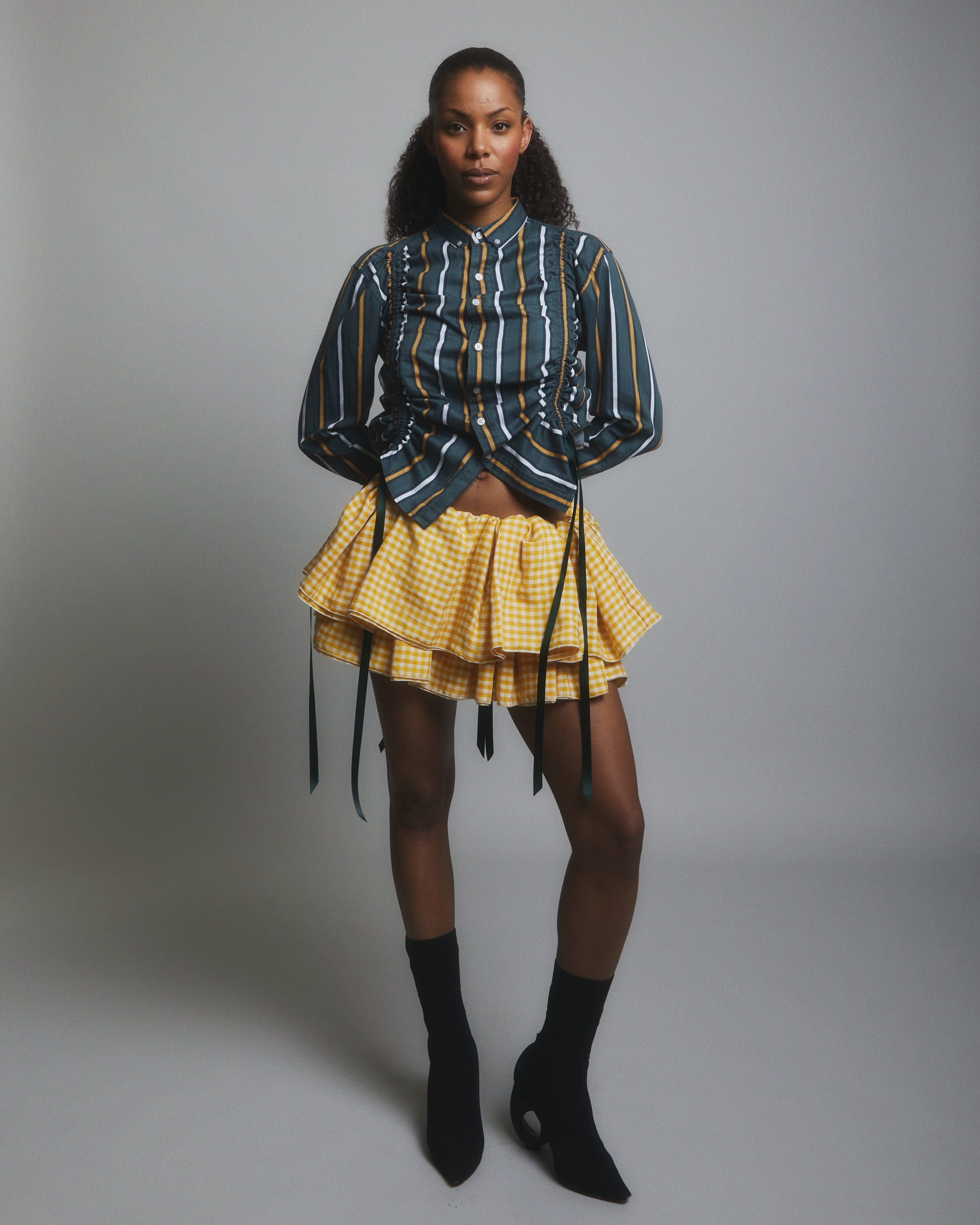
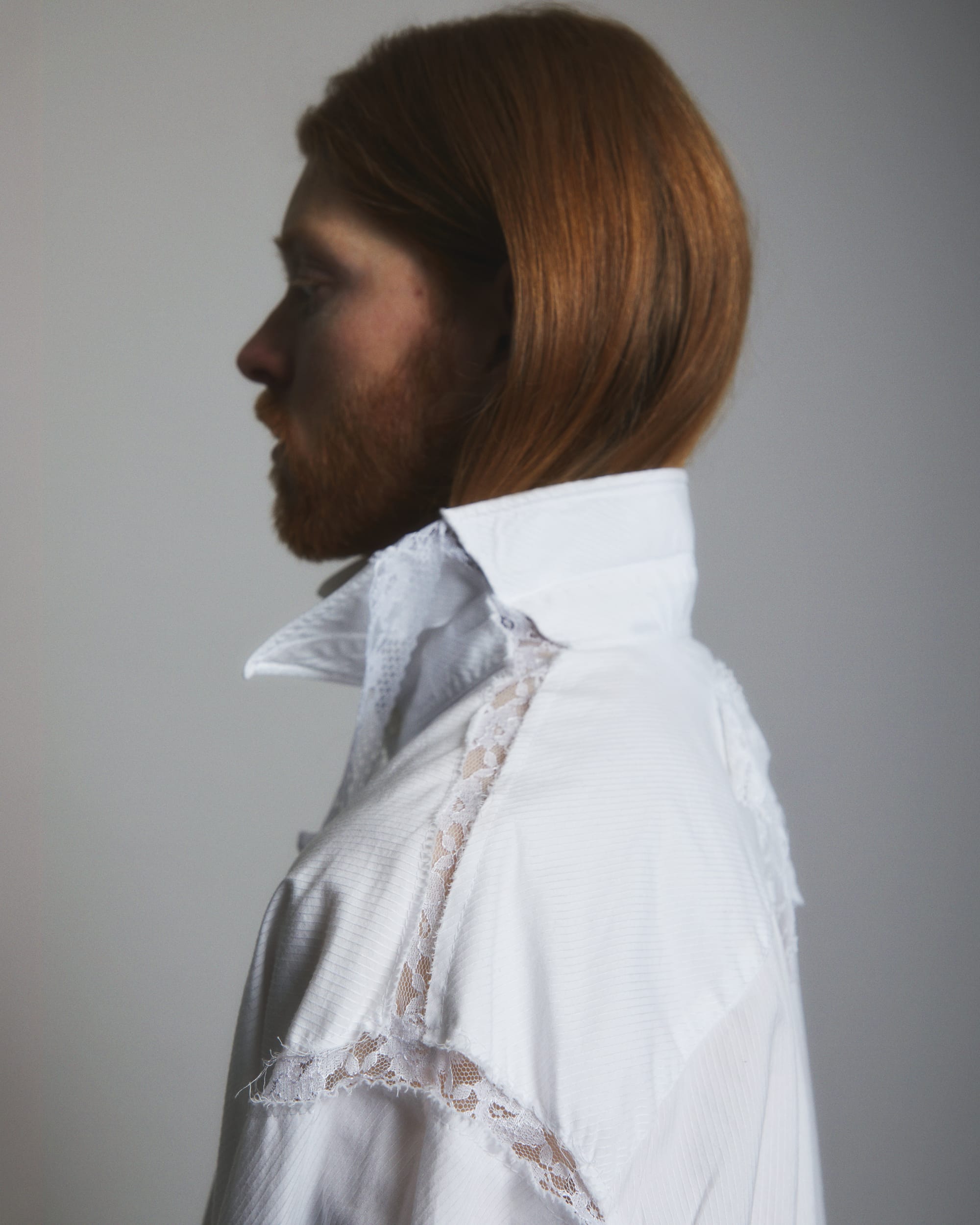
“Catering to a broad audience is always challenging, so I translated my references into more voluminous everyday garments that offer greater versatility and adaptability in styling,” Holloway explains. The aim is longevity in use as much as in material life, with garments designed to remain relevant across shifting wardrobes and occasions.
That adaptability is expressed through subtle interventions in construction and finishing. “The garments can be worn across a lifetime and be a fully fluid part of anyone’s wardrobe,” Holloway says, emphasising durability of both form and function.
Small design alterations are used to shift the tone of a piece without compromising its everyday utility. “For example a rework baggy shirt can act as a casual piece but when we replace the seams with lace it elevates to something more intentional but still a core item that would work for everyday and also something special for a night out,” Holloway adds.
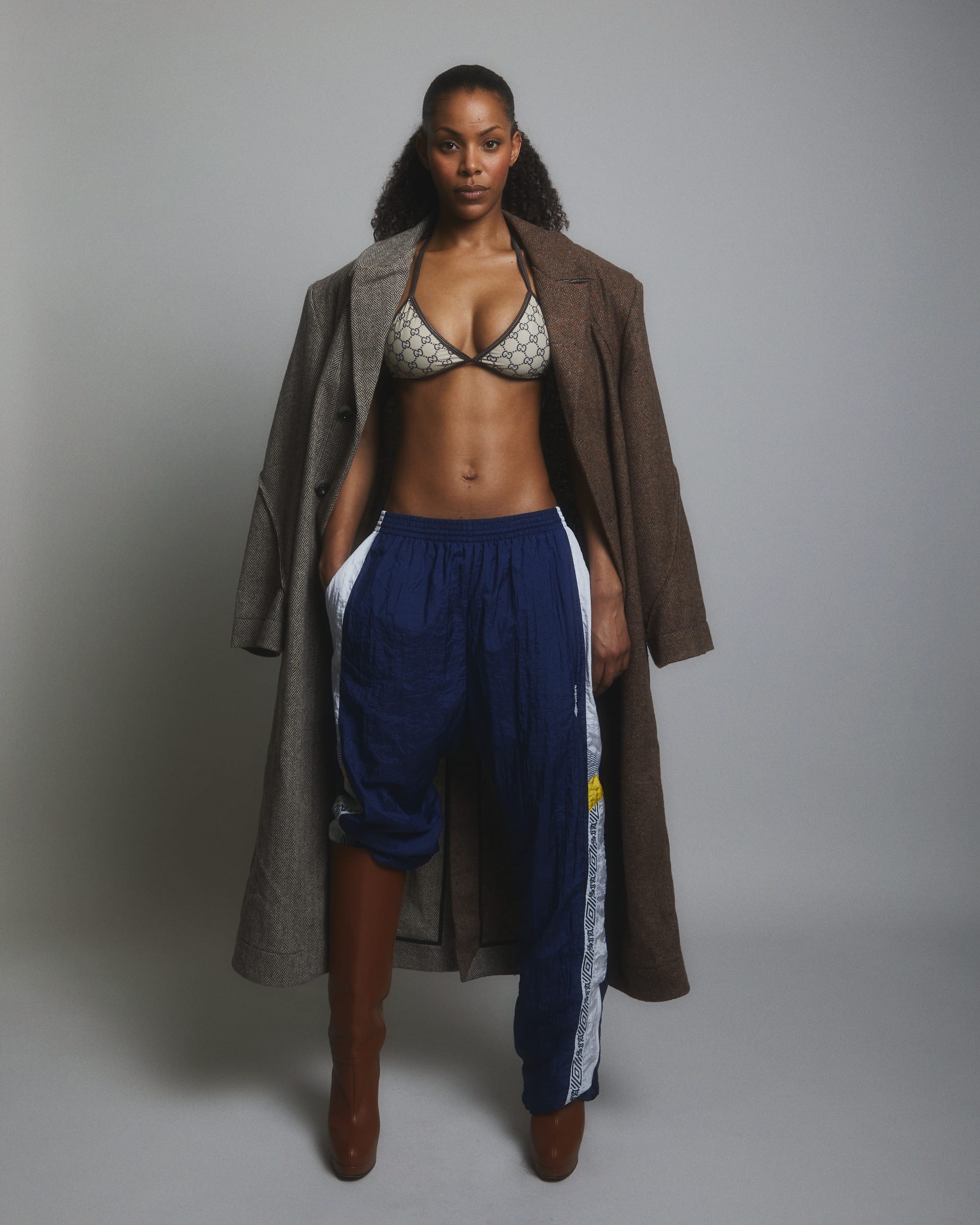
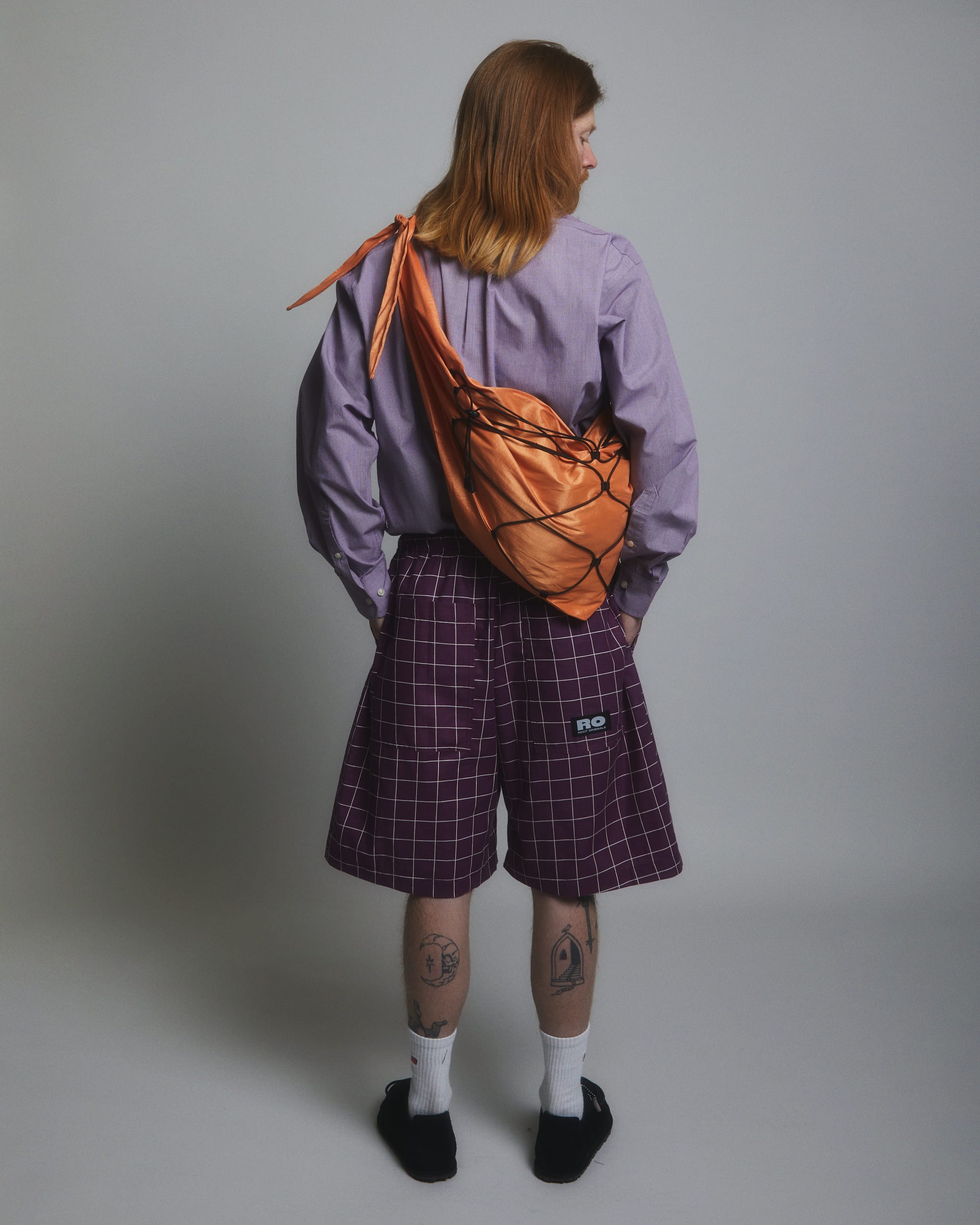
The latest REWORKED collection positions Rokit Originals further within the growing circular fashion landscape, where reworked and upcycled design is increasingly seen as a viable alternative to new production. By working exclusively with preloved textiles and producing limited-run pieces in-house, the label continues to emphasise longevity, individuality and waste reduction as central design principles.
For Holloway, the wider ambition is to reshape perceptions of reworked fashion itself. “My vision for Rokit Originals is to create bold, clean designs that exhibit the amazing vintage product we have to work from,” she says. Drawing on influences from street and skate culture, she adds: “I want to change the stereotype of rework fashion by blending classic 90’s shapes with modern ideas.”
As Rokit Originals continues to refine its creative direction, the REWORKED collection stands as a further step in aligning contemporary design language with circular production methods, reinforcing the brand’s position within London’s evolving sustainable fashion landscape.