
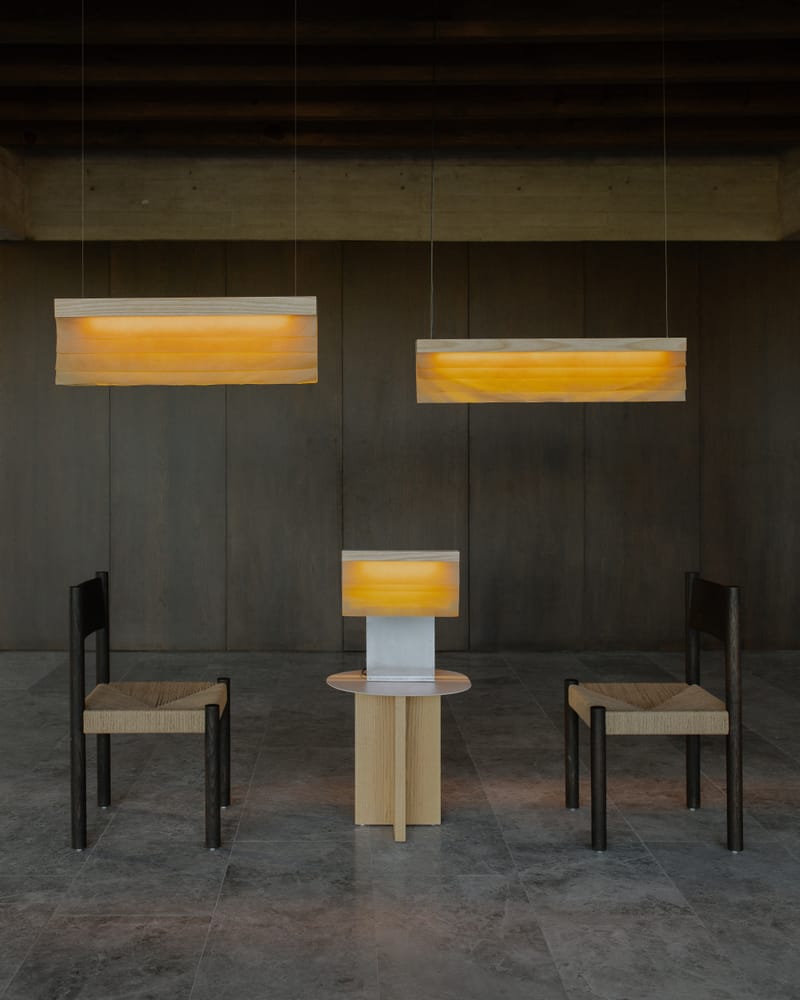
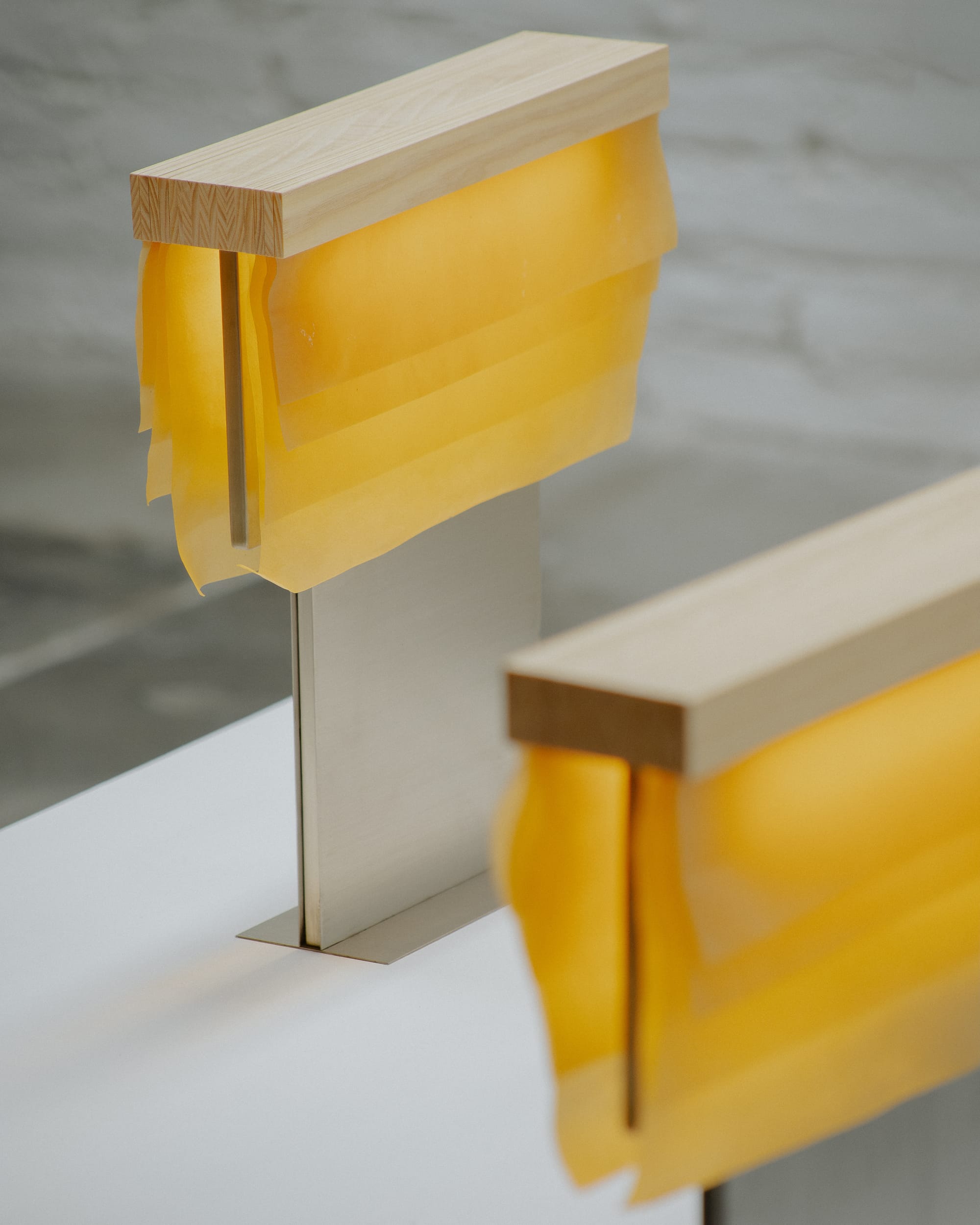
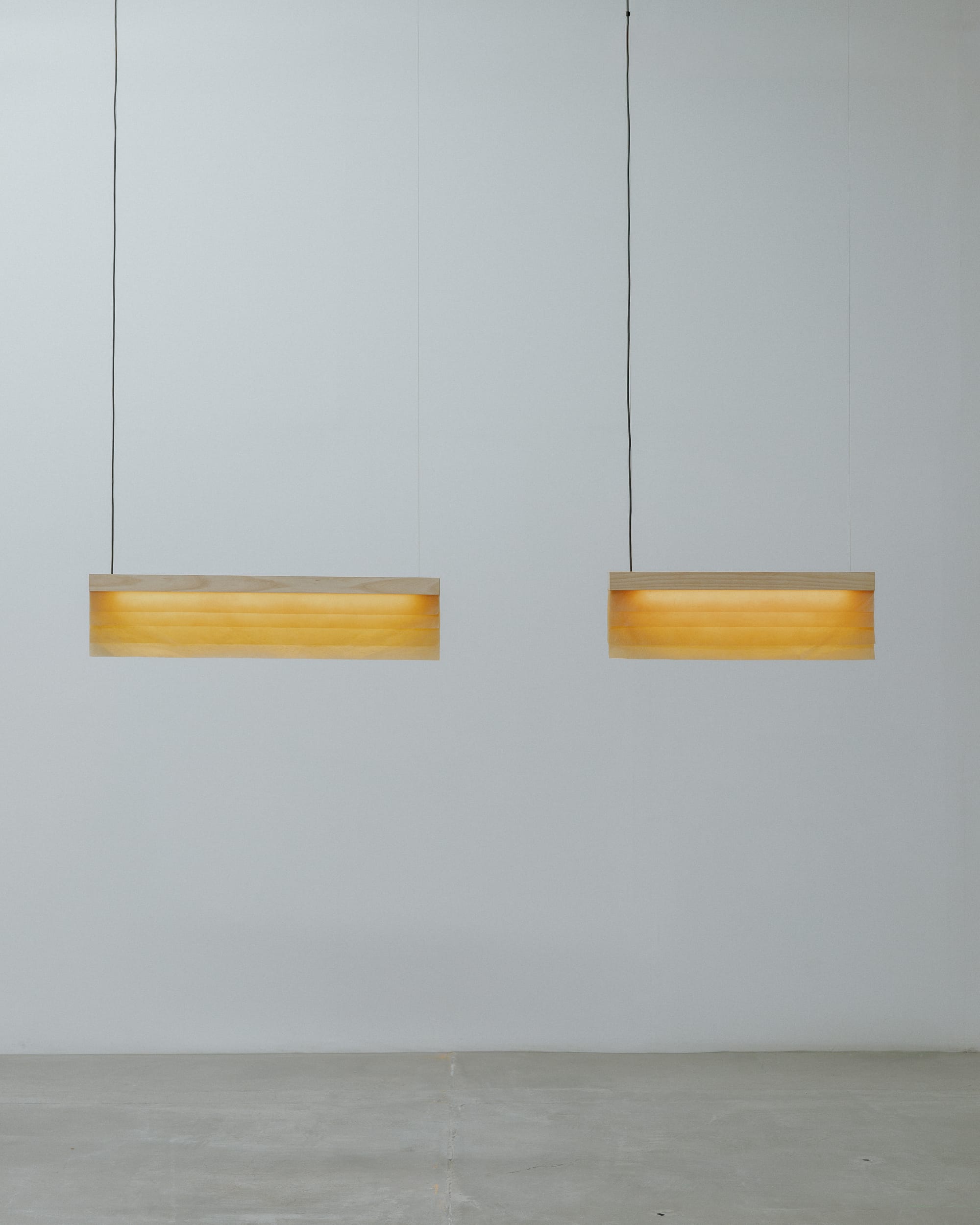
Polybion and Natural Urbano have revealed Cenit, the second chapter in their creative partnership following last year's Lapso. While the first collaboration introduced cultivated cellulose through a sculptural lighting object, the new made-to-order collection broadens the concept into a family of pendant and table lamps that combine natural ash, stainless steel, Celium™ Manto and Celium™ Espumante.
Inspired by the moment the sun meets the horizon, Cenit translates a fleeting natural phenomenon into a lighting collection designed to bring warmth and texture into domestic and hospitality interiors. Rather than treating light as a purely functional element, the collection uses biomaterials to create atmosphere, allowing illumination to interact with organic surfaces and subtle material variations.
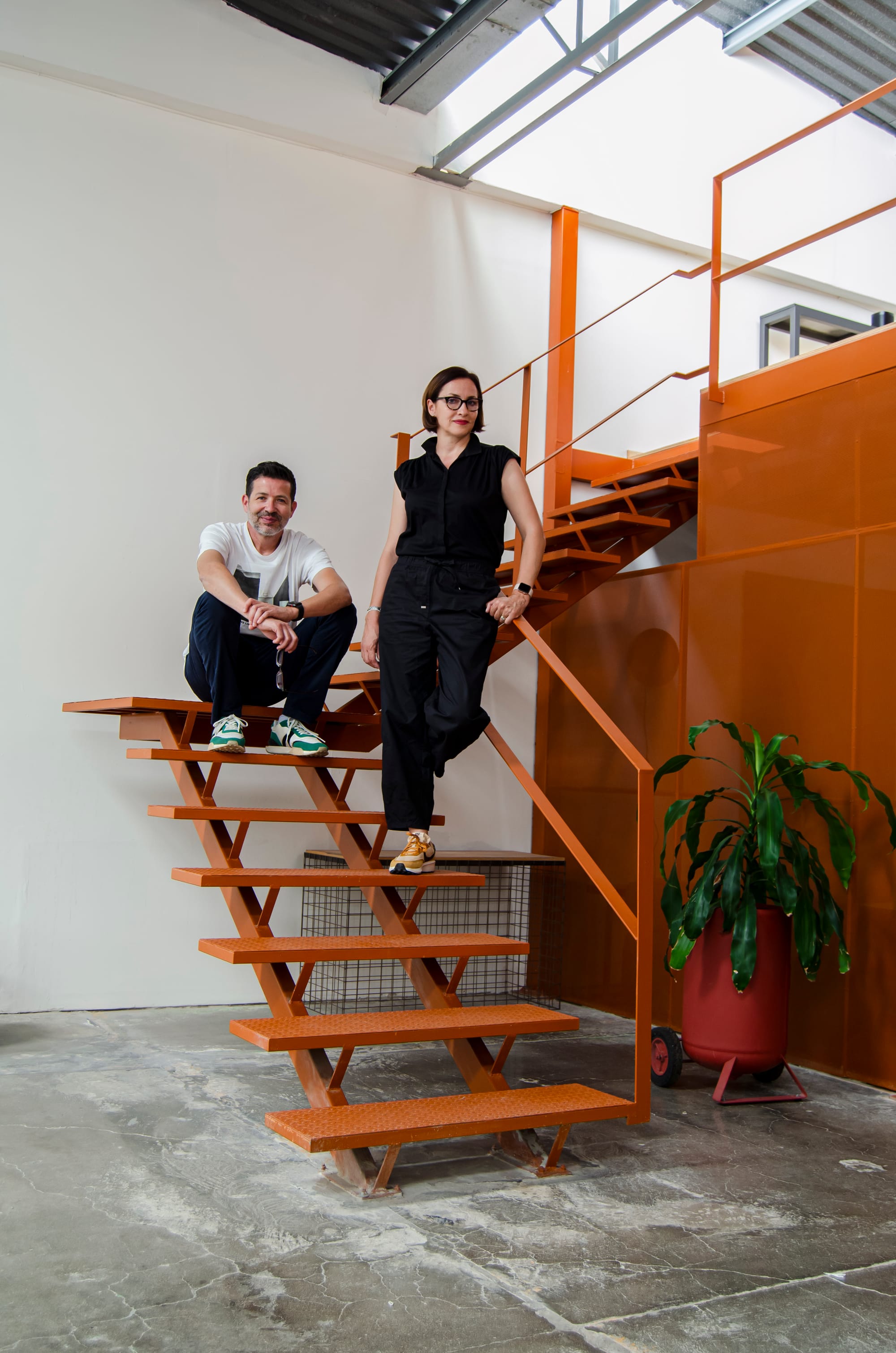
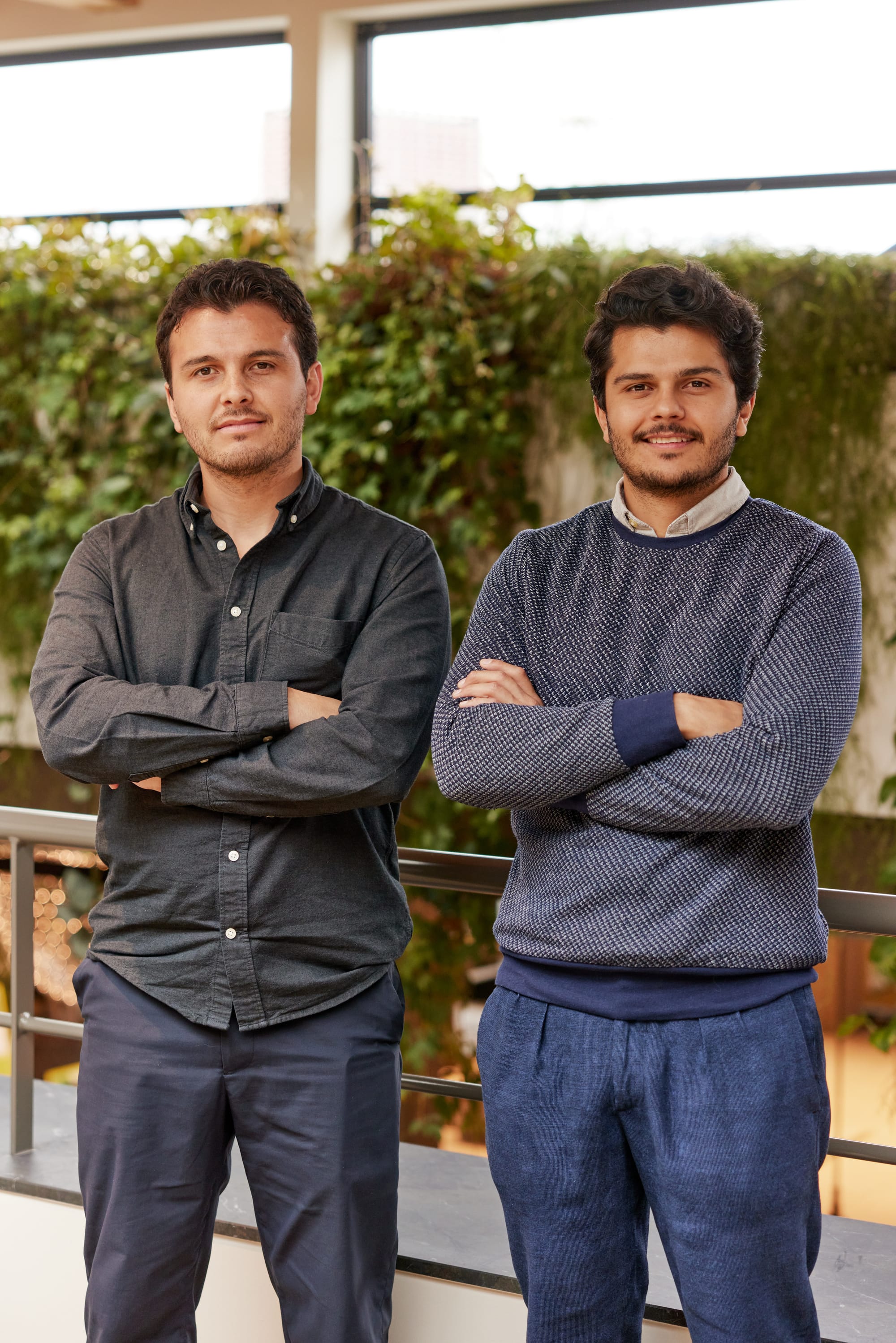
The collaboration brings together biomaterials company Polybion and Mexican design studio Natural Urbano for their second lighting collection. Left: Natural Urbano - Sebastián Beltrán and Lorena Márquez. Right: Polybion - Axel and Alexis Gómez Ortigoza
For Alexis Gómez Ortigoza, Co-Founder and Co-CEO of Polybion, the evolution from Lapso to Cenit reflects a deeper understanding of how cultivated cellulose can perform beyond a single statement piece.
"Lapso allowed us to introduce Celium™ into lighting through a sculptural object. It was a first exploration of how cultivated cellulose could interact with light, volume and atmosphere," says Gómez Ortigoza. "With Cenit, that understanding became more precise and more architectural."
He explains that the latest collection demonstrates how Celium™ Manto has evolved from being a surface material into an integral part of the lighting experience itself. By pairing it with natural ash and stainless steel, the project creates a dialogue between precision, craftsmanship and biological variation, showing that cultivated cellulose can become "a material language" rather than simply a material innovation.
That progression was equally significant for Sebastián Beltrán and Lorena Márquez, Co-Founders and Co-Directors of Natural Urbano, who describe Lapso as an important period of experimentation.
"Lapso was our first approach to Celium and, in many ways, an exploratory project," Beltrán and Márquez explain. "With a much deeper understanding of Celium, we were able to focus less on resolving the material and more on exploring its ability to create atmospheres."
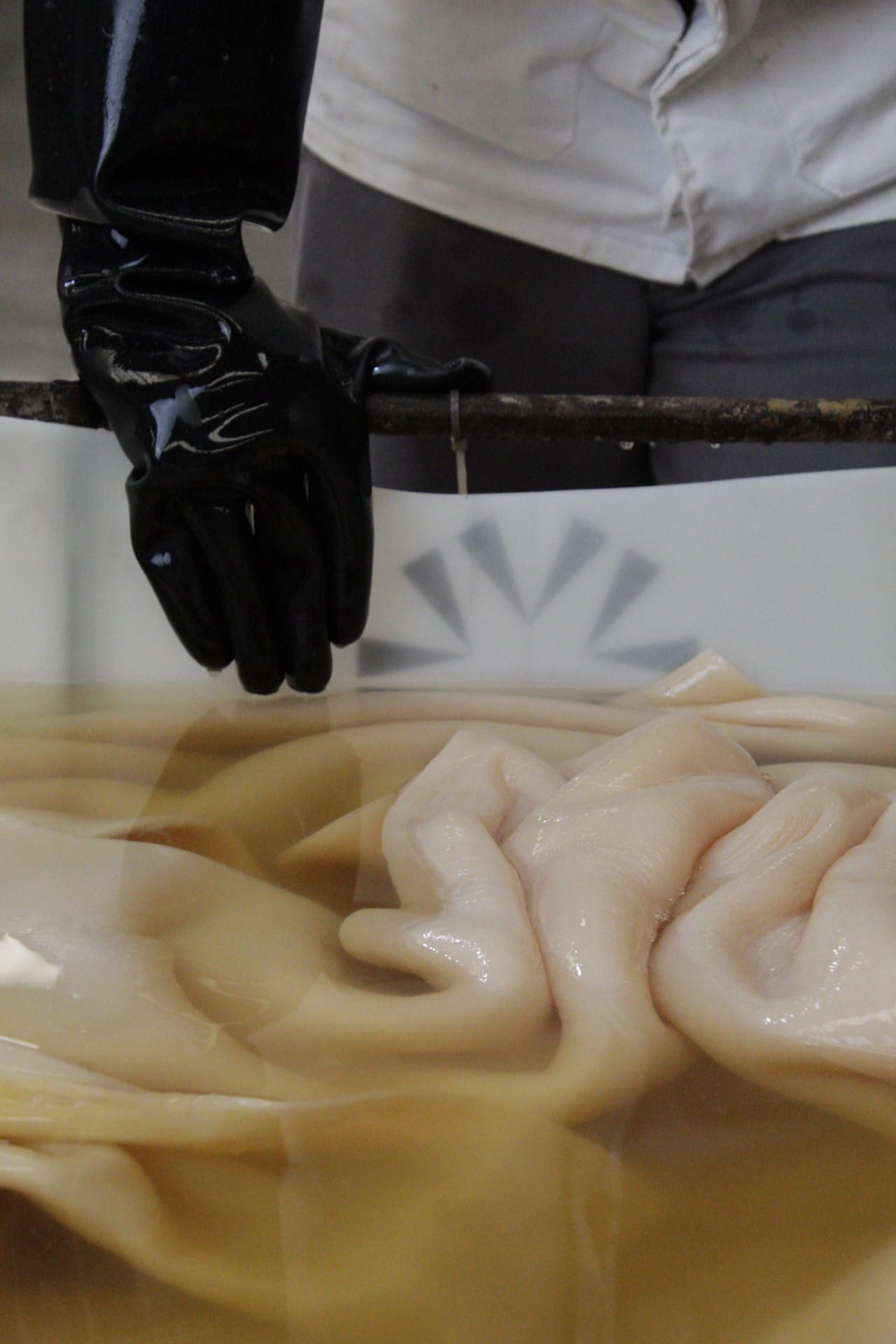
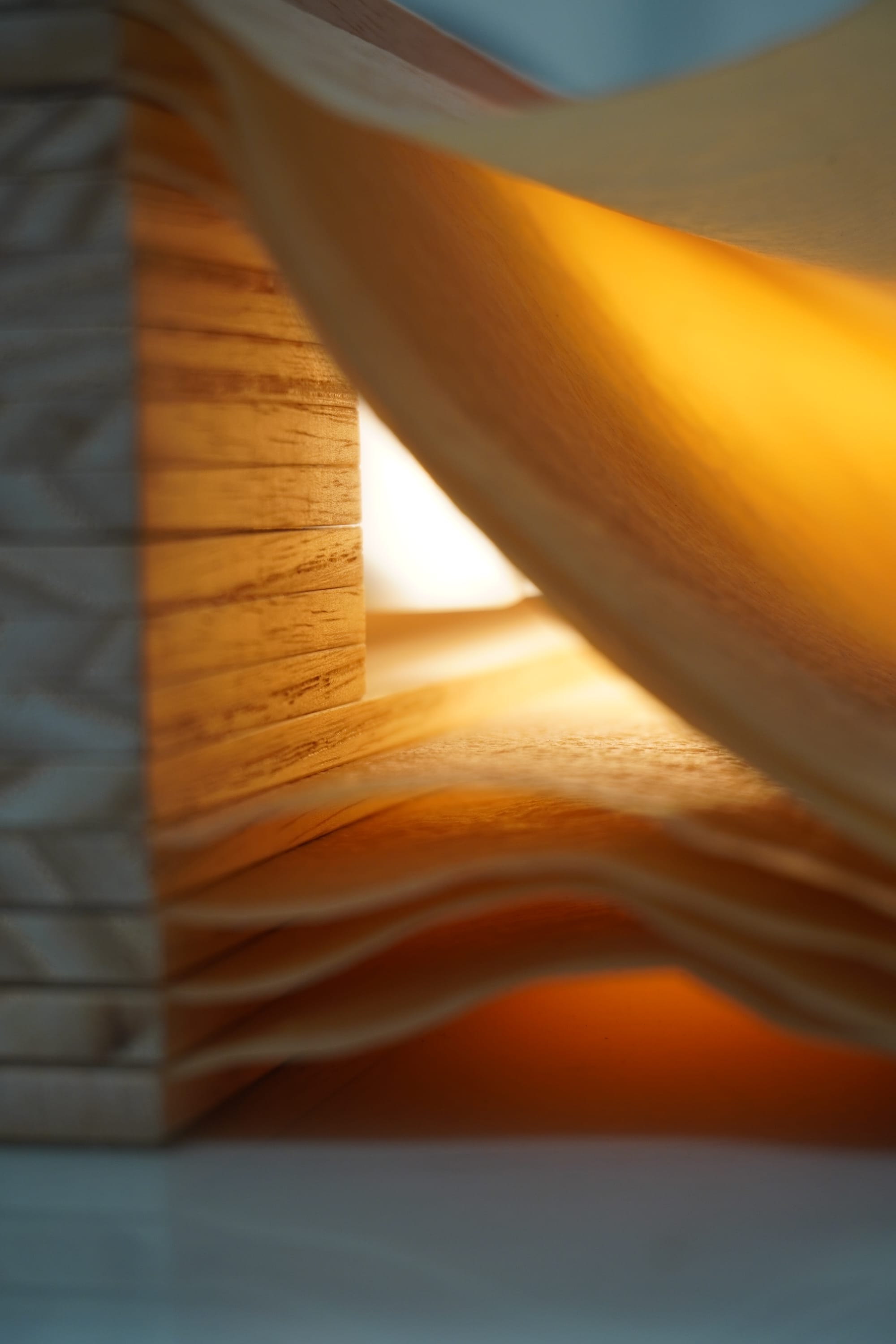
Behind the scenes of Cenit's development, where natural ash, stainless steel and cultivated cellulose come together.
Where the first collection celebrated discovery, they say Cenit was conceived to demonstrate how innovative biomaterials can become sophisticated, functional objects capable of integrating naturally into everyday architectural settings.
The designers' inspiration stems from childhood memories of growing up in Ensenada, Mexico, where sunsets over the Pacific Ocean became a defining visual reference. Rather than reproducing those scenes literally, the collection captures their emotional quality through layered horizontal forms that evoke the horizon while diffusing warm light throughout a room.
"The horizontal layers evoke the line of the horizon, while the light gradually filters through them, creating a warm and enveloping illumination that recalls the final moments of the day," Beltrán and Márquez say. "More than reproducing an image, we wanted to translate a memory and an atmosphere into an object capable of transforming the experience of a space."
That atmospheric quality is made possible by Celium™ Manto itself. Unlike conventional lighting materials, its translucency allows it to transform light rather than simply conceal its source. According to Gómez Ortigoza, the cultivated cellulose reveals its own tone, density and texture as light passes through it, making each lamp visually distinct.
"Each sheet carries subtle differences, and in lighting those differences become more evident," he says. "Instead of treating variation as something to standardise away, Cenit uses it to create depth, warmth and individuality."
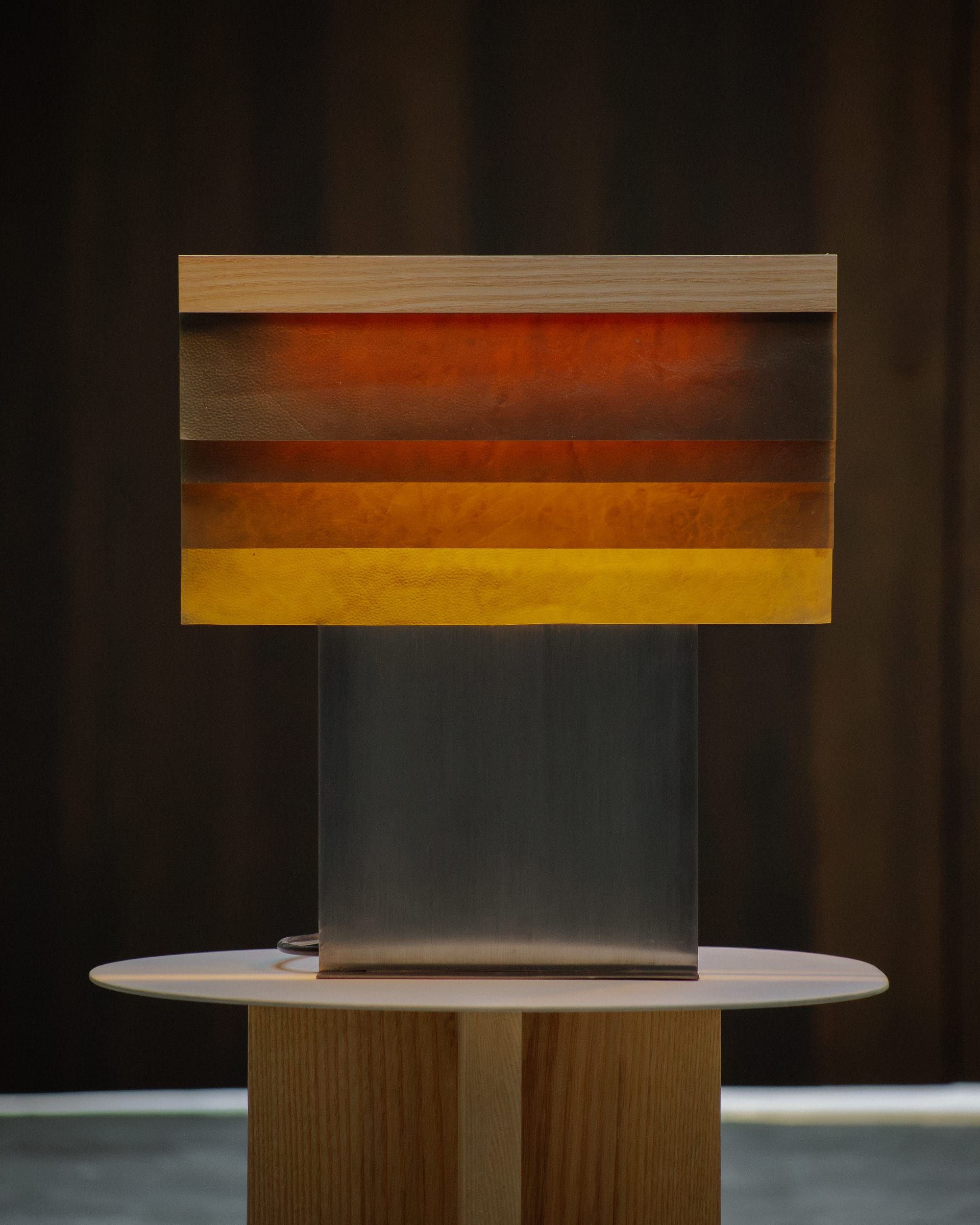
Natural Urbano embraced those natural characteristics throughout the design process. Rather than applying Celium™ as a decorative finish, the material informed the structure of the collection from the outset.
"Celium was never a finish applied at the end of the process; from the beginning, it was a material that directly influenced the design of the collection," Beltrán and Márquez explain. "Instead of hiding or transforming it, we wanted it to express its own nature."
The resulting pendant and table lamps are intended to adapt to a variety of interiors, from dining rooms and living spaces to hospitality settings and workspaces. The designers hope the pieces become part of daily life by creating calm, layered environments rather than dominating them visually.
"We are interested in people experiencing light as a functional resource and as an element capable of transforming the perception of a space," they say. "With Cenit, we aimed to create a lamp that accompanies everyday life with discretion, while maintaining a meaningful presence even when it is turned off."
For Polybion, projects such as Cenit are equally important because they demonstrate that cultivated cellulose extends far beyond fashion and accessories. Gómez Ortigoza describes Celium™ as "a platform material" capable of moving across industries, from interiors and furniture to architectural applications.
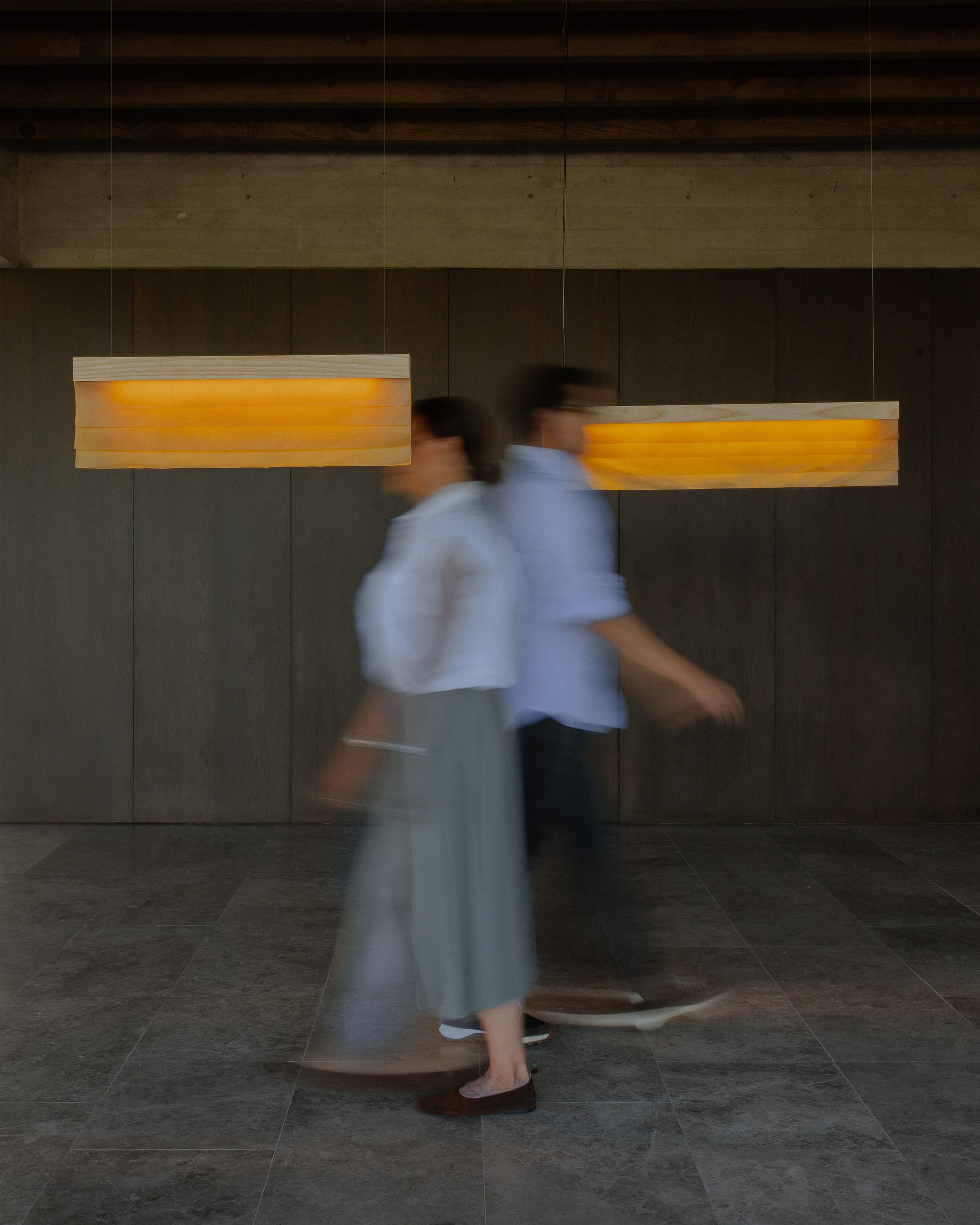
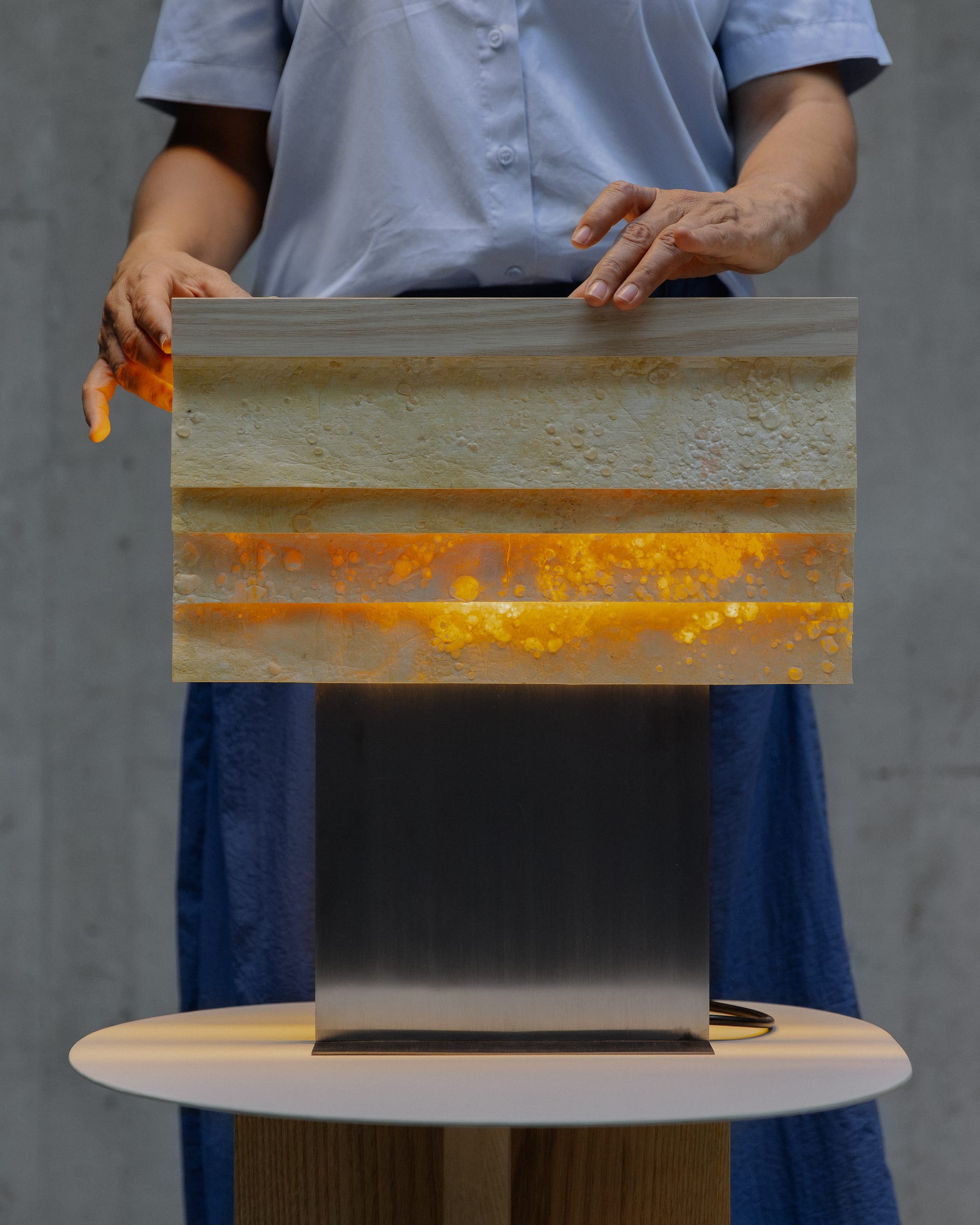
"Cenit is relevant because it places cultivated cellulose in a more domestic and spatial context," he says. "When people see Celium™ in a lamp, filtering light and becoming part of an interior environment, they understand the material through experience, not only through technical explanation."
The collaboration also reflects a wider shift in how biomaterials are evaluated. Rather than measuring new materials solely by how closely they imitate leather or synthetic alternatives, Polybion believes designers should embrace the distinct sensory qualities they offer.
"Our goal is not simply to replace one material with another," Gómez Ortigoza says. "Our goal is to introduce a new material reality."
He argues that Cenit succeeds because it allows Celium™ to perform according to its own strengths, filtering light, revealing biological variation and creating warmth within architectural spaces, rather than imitating existing materials.
Natural Urbano shares that philosophy, describing the collaboration as an opportunity to rethink how materials shape contemporary design.
"We believe the role of biomaterials in contemporary design is to expand creative possibilities and question the way we conceive the objects that surround us," Beltrán and Márquez say. "Working with Celium has taught us to design with sensitivity toward the material, respecting its characteristics and allowing it to become an active part of the creative process."
Looking ahead, Gómez Ortigoza believes biomaterials are approaching an important turning point. Rather than remaining isolated experimental concepts, he sees cultivated materials becoming repeatable, commercially viable solutions across furniture, interiors, hospitality and product design.
"We also believe there is an opportunity to rethink what consistency means," he says. "Cultivated materials introduce another possibility: controlled processes that still preserve natural variation."
With Cenit, Polybion and Natural Urbano demonstrate that biomaterials can do more than reduce environmental impact. They can introduce new visual languages, enrich everyday experiences and redefine the relationship between material, light and architecture, pointing towards a future where sustainable innovation is valued not for what it replaces, but for what it uniquely makes possible.