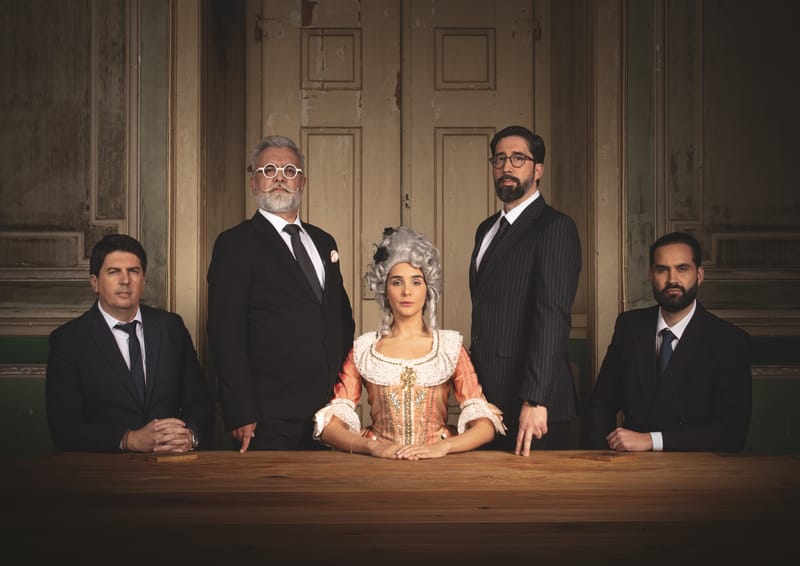
What if pay equality were still more than 100 years away? What photograph would illustrate that reality?
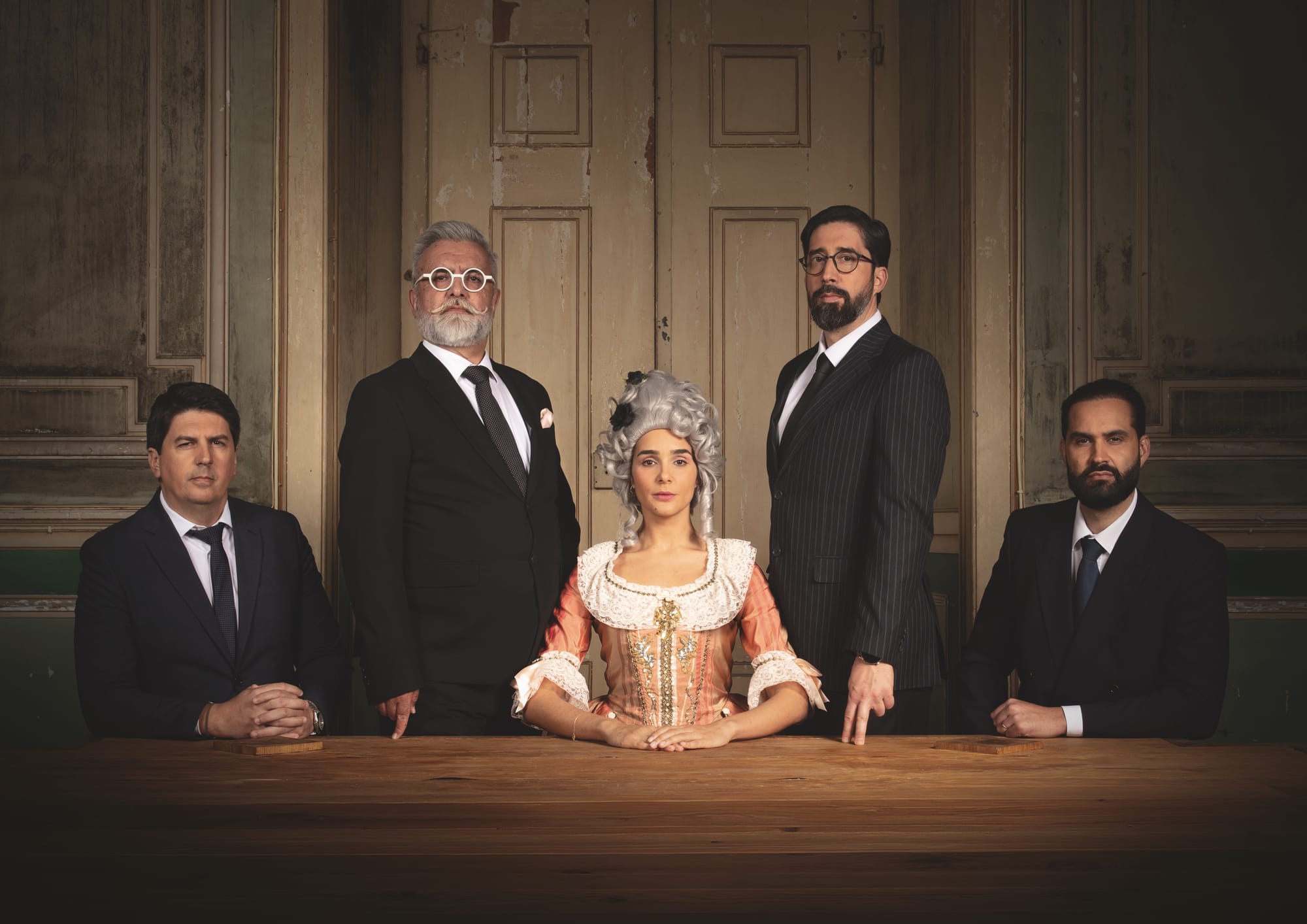
For this year’s International Women’s Day, Ownever answers that question with an image that deliberately unsettles. In the photograph, a woman appears as though she has stepped out of another century. Her silhouette is sharply defined, the fabrics unmistakably from another era, her posture restrained and formal. Around her stand men dressed in the unmistakable uniform of contemporary authority: tailored corporate suits belonging firmly to 2026.
The contrast is immediate and disquieting. Visually, everything around her signals modern leadership. Yet the woman’s presence suggests something else entirely — the possibility that, beneath the surface of progress, the structures governing power and pay have not moved nearly as far forward as appearances suggest.
The image was created by internationally recognised photographer Daryan Dornelles and, notably, involves no artificial intelligence. It is a single constructed photograph, conceived as a visual statement rather than a digital composition. Its purpose is simple but pointed: to hold a mirror up to the present.
Ownever, a Portuguese luxury leather goods brand founded by women and rooted in the concept of legacy, chose aesthetics as the medium for that reflection. Rather than producing a celebratory campaign, the brand sought to provoke a question: have we truly evolved, or have we simply modernised the appearance of power?
According to the World Economic Forum, at the current pace, full gender parity could still be approximately 123 years away. The organisation’s analysis also found that in 2024 women made up 41.2% of the global workforce, yet remained significantly underrepresented where authority and compensation converge. Among senior managers with higher education, only 29.5% were women — a disparity the report identifies as one of the central barriers to equality.
Eliana Barros, founder of Ownever, explains the intention behind the project: “We did not want to celebrate International Women’s Day in a decorative way. We wanted to remind people that certain structures remain intact. When we analyse salaries and leadership roles, the reality still reveals a striking delay. This image is a portrait of that contradiction.”
For Dornelles, the photograph continues a long tradition of using fashion imagery as a form of commentary. “It was a privilege to create a photograph that confronts the present with its own reflection,” he says. “Fashion and imagery have always been vehicles for social discourse. Here, aesthetics serve to reveal what often remains invisible.”
The result is less a campaign than a position. By suspending time in a single frame, Ownever invites viewers to question the timeline of progress — and whether the distance between appearance and reality is greater than many would like to admit.
Founded in Portugal, Ownever collaborates with master artisans and advocates longevity as a form of cultural resistance. Each leather piece is designed to endure, to be repaired and to be passed on, reflecting the brand’s belief that true legacy is built over time. In this case, however, the conversation is not about objects meant to last generations, but about a social imbalance that — according to current projections — may do the same.