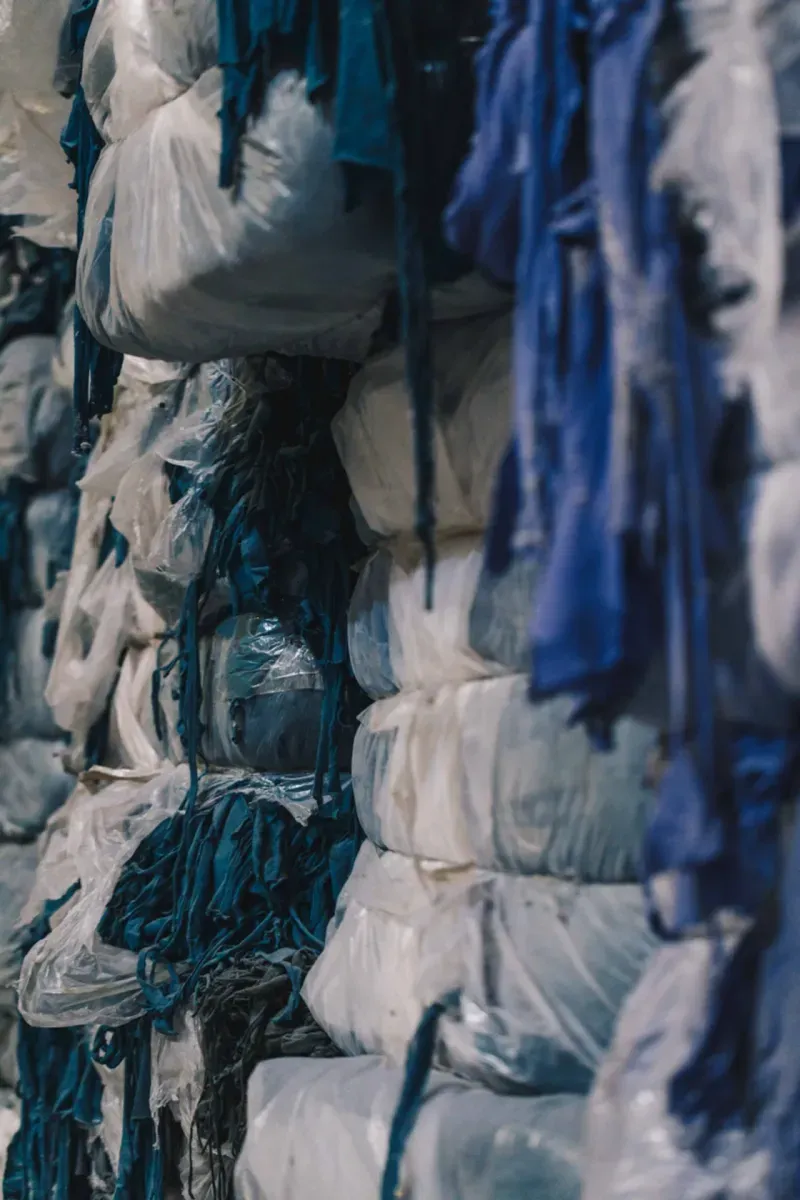
The Secondary Materials and Recycled Textiles Association (SMART) has urged the United Nations Environment Programme and Basel Convention Parties to reject proposals that would reclassify used textiles as “waste”, “hazardous waste”, or “plastic waste”. In a critical submission, SMART argues that such changes would dismantle functioning global reuse systems and jeopardise millions of jobs in countries that rely heavily on secondhand textile markets.
When talking to Circulaire Journal, Jessica Franken, Director of Government Affairs at SMART, said the proposed reclassification “wouldn’t just affect exports—it would destabilise the entire reverse supply chain that keeps textiles in circulation.” She explained that today’s system depends on predictable flows of reusable clothing from collection, through sorting hubs, and into global markets. “If those materials are treated as waste, strict controls, bans, and shipping requirements would choke off these flows,” she said, adding that the knock-on effects would undermine collection systems, cripple sorting operations, restrict supply to reuse and repair markets, and ultimately push more textiles into landfills and incinerators. According to Franken, “It threatens the whole functioning circular system—not just one step in it.”

“Used textiles are not waste – they are the backbone of the global circular economy.”
- Jessica Franken, Director of Government Affairs at SMART
SMART’s submission is anchored in what Franken describes as “a growing body of methodologically rigorous, on-the-ground research” showing that 80–95% of exported secondhand clothing is reused, resold, or repurposed. She pointed to recent audits and fieldwork across Africa and Latin America that have physically examined thousands of garments, weighed bales, and surveyed traders. These studies consistently find only 5–10% true waste. “Together, these studies form a robust, contemporary evidence base directly contradicting outdated claims of 40% waste,” she said, emphasising that earlier figures are based on research that “lacks methodological rigour” and was never intended to represent national-scale flows.
Franken stressed that the stakes are particularly high for communities in the Global South. “Reclassifying reusable secondhand textiles as ‘waste’ would directly threaten the millions of livelihoods, especially women and youth, who depend on this trade,” she said. Across countries such as Uganda, Tanzania, Kenya, and Guatemala, secondhand markets provide accessible economic opportunities for importers, traders, tailors, transporters, and small recyclers. Disrupting supply would mean lost income, reduced affordability for households, and shrinking local repair and reuse ecosystems. “The proposed changes could destabilise entire community economies built around keeping textiles in use,” she said.
SMART’s letter also raises concerns about what Franken describes as “policy colonialism”—a term used to describe situations in which Global North regulatory decisions disproportionately affect countries in the Global South. She argues that the proposed restrictions risk imposing economic hardship on communities with limited influence over international negotiations. “The costs and consequences of Northern policy choices are exported to the South,” she said. “These are vibrant, functioning circular systems, and they shouldn’t be undermined by policies developed without the participation of those who depend on them.”
A major focus of SMART’s submission is correcting what it sees as fundamental misunderstandings about textile composition. “Secondhand textiles are not hazardous materials,” Franken said. “They’re made from the same fibres already worn safely by billions of people every day.” She warned that classifying synthetic garments as plastic waste also misrepresents their value and role in reuse markets. “Synthetic garments aren’t low-value packaging scraps; they’re durable goods designed to be used again and again,” she noted. Misclassification, she argued, would apply the wrong regulatory tools and ultimately damage circular systems that prevent plastic leakage and reduce demand for virgin fibres.
Rather than downstream restrictions, SMART is urging policymakers to focus upstream on the issues that genuinely drive global textile waste. “The volume of textile waste we see globally is driven overwhelmingly by overproduction and the fast-fashion model, not by the secondhand sector,” Franken said. She highlighted Extended Producer Responsibility (EPR) as one of the most effective mechanisms to incentivise better design and reduce waste at source. By incorporating tools such as eco-modulation and malus fees, well-designed EPR schemes can shift industry behaviour towards durability, repairability, and recyclability. “The secondhand sector is the solution, not the problem,” she said. “If policymakers want to reduce waste and strengthen circular systems, they need to focus on the front end of the supply chain, where most of the problem originates.”
As negotiations continue at the Basel Convention, SMART’s message is clear: evidence-based policymaking is essential to protecting both the global circular economy and the communities whose livelihoods depend on it.